



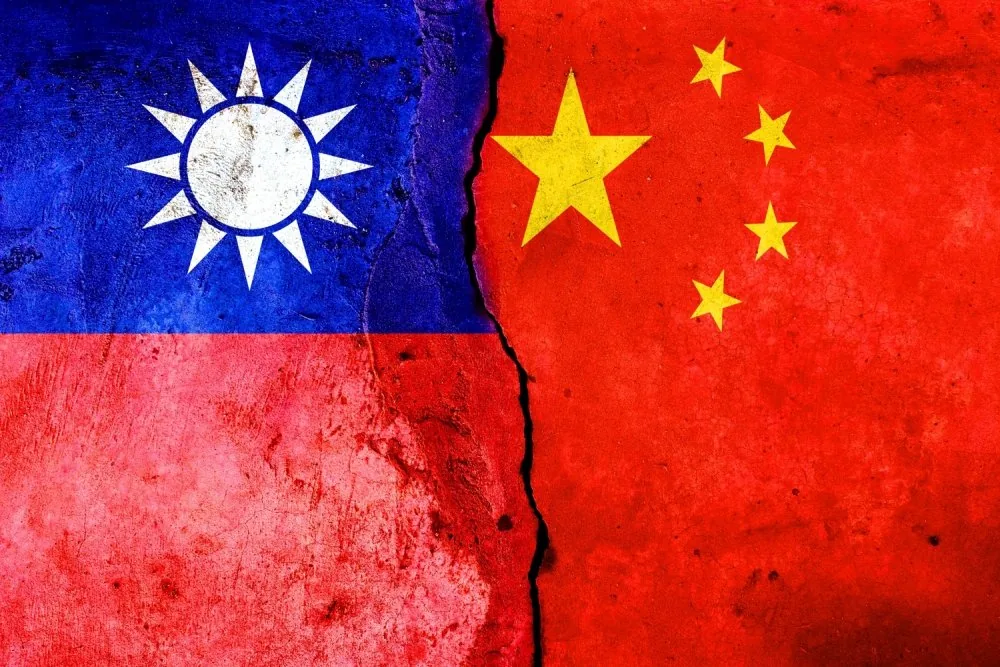
The question of a cross-strait conflict remains the most significant geopolitical “black swan” in the Pacific. With a deadline of March 31, 2026, the window for a potential military offensive is roughly 16 months away. While rhetoric from Beijing remains stern, the current physical and diplomatic landscape suggests a strategy of “gray zone” pressure rather than the massive kinetic buildup required for a full-scale invasion.
Recent Developments and Fact-Check
In the last 14 days, several key signals have emerged from high-level diplomacy and military planning:
- The “Red Line” Reinforcement: During the APEC summit in mid-November 2024, Chinese President Xi Jinping explicitly identified the “Taiwan question” as the first of four red lines that must not be challenged. This statement, while consistent with previous rhetoric, was delivered directly to the outgoing U.S. administration as a clear marker for the incoming one.
- U.S. Arms Integration: On October 25, 2024, the U.S. State Department approved a $2 billion arms package for Taiwan, including the Advanced Surface-to-Air Missile System (NASAMS). These systems are specifically designed to counter the types of aerial incursions China has been conducting, signaling a focus on “porcupine” defense strategies that make an invasion increasingly costly.
- Economic Prioritization: China’s recent legislative focus has remained heavily weighted toward domestic economic stabilization. The standing committee of the National People’s Congress recently approved a massive 10 trillion yuan ($1.4 trillion) debt swap program to ease local government financial strains. A full-scale invasion would likely require a shift toward a war economy, which is not currently reflected in these fiscal maneuvers.
Analysis of the 2026 Timeline
Why does the March 2026 date matter? Here’s the thing: an invasion of Taiwan would be the most complex amphibious operation in modern history. Military analysts generally agree that such an undertaking would require months of visible preparation—stockpiling blood supplies, moving massive troop concentrations to the Fujian coast, and clear maritime shifts. We aren’t seeing those specific “loud” indicators right now.
Read more Bitcoin price on March 8?
Instead, Beijing appears to be favoring “Joint Sword” style exercises—short, high-intensity drills intended to exhaust Taiwan’s air force and navy without crossing the threshold into open war. The goal seems to be coercion and isolation rather than immediate conquest. Furthermore, the political transition in the United States introduces a period of unpredictability. Beijing typically prefers to test new administrations through diplomatic and economic pressure before considering high-risk military gambles.
What Could Shift the Outlook?
What changes the picture? Look closer at these three potential triggers:
- A Total Maritime Blockade: If China transitions from “drills” to a permanent “quarantine” or blockade of Taiwan’s ports, the probability of a “Yes” outcome increases significantly, as the resolution criteria include establishing control over any portion of the territory.
- Legislative Changes: Any move by the Chinese government to formally move beyond the 2005 Anti-Secession Law toward a more immediate “unification timetable” would be a major red flag.
- U.S. Policy Shifts: Clear signals from the incoming U.S. administration regarding the abandonment of “strategic ambiguity” or, conversely, a significant reduction in regional presence could embolden or deter Beijing depending on the specific posture.
Current data shows a very low perceived probability of this event occurring by the 2026 deadline, with the consensus hovering around 1.35%. Despite a total volume of over $5.4 million and significant liquidity of approximately $144,000, the price has remained remarkably stable, trending slightly downward by 0.0075 over the past week. This suggests that while the geopolitical tension is high, the specific 16-month window is viewed as too narrow for a total military offensive.
Read more GPT-6 released by…?
Источники: