


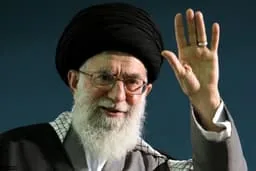
The question of who will succeed Ayatollah Ali Khamenei is the ultimate “black box” of Middle Eastern politics. As we move into March 2026, the focus has intensified on the institutional windows where such a monumental announcement could realistically occur. In Iran, power transitions aren’t just about health; they are about the consensus of the clerical establishment and the Islamic Revolutionary Guard Corps (IRGC).
Read more Next Prime Minister of Hungary
Fact-Check: The Current State of Play
To understand the timing, we have to look at the institutional machinery currently in motion. Here are the core facts from the last few months:
- The Assembly of Experts Mandate: The 6th Assembly of Experts, which was inaugurated in May 2024, remains under the leadership of Chairman Mohammad-Ali Movahedi-Kermani. This body is constitutionally mandated to select the next leader, and its internal “Succession Committee” maintains a classified list of candidates. You can see the leadership structure details via Reuters.
- Khamenei’s Public Activity: Despite persistent rumors regarding his health, the Supreme Leader has maintained a consistent schedule of public appearances, including religious lectures and meetings with state officials. His recent participation in high-profile events suggests that the “emergency” transition protocol has not been triggered. His official updates are tracked at Khamenei.ir.
- The March Window: Historically, the Assembly of Experts holds its major biannual sessions in early March. This makes the first two weeks of March a period of heightened scrutiny for any deviation from standard administrative procedures.
The Leading Scenario: No New Leader by March 31
The most grounded expectation remains that no new leader will be announced by the March 31, 2026, deadline. Why? Because the Iranian regime prioritizes “Nezam” (the system’s survival) above all else. A transition while the current leader is still functional would create unnecessary power vacuums and invite internal friction between various factions of the IRGC and the clergy.
Here’s the thing: unless there is a sudden, catastrophic health event, the Assembly of Experts has every incentive to delay an announcement until the absolute last moment. The lack of a publicly designated “Crown Prince” (especially after the death of Ebrahim Raisi in 2024) means the consensus-building process is likely still ongoing behind closed doors. For a deep dive into the succession dynamics, see the Council on Foreign Relations analysis.
Read more ChatGPT back in as #1 Free App in the US Apple App Store by…?
Comparing the Alternatives: The March 6–7 Window
If an announcement were to happen, the dates of March 6 and March 7, 2026, are the most logical institutional candidates. These dates typically align with the conclusion of the Assembly of Experts’ spring session. An announcement on these days would suggest a “planned” transition rather than an emergency one. However, compared to the “No New Leader” scenario, this is less likely because there have been no preparatory signals—such as unusual movements in the capital or shifts in state media programming—that typically precede a change of this magnitude.
Triggers to Watch
What changes the picture? Look closer at these three signals:
- Extraordinary Sessions: If the Assembly of Experts calls for an unscheduled meeting outside of the early March window, it is a primary indicator of an imminent announcement.
- State Media Shifts: A sudden change in the broadcast schedule of IRIB (Islamic Republic of Iran Broadcasting), specifically the playing of Quranic recitations or patriotic hymns, often precedes major state announcements.
- IRGC Mobilization: Any unusual security cordons in Tehran, particularly around the Beit-e Rahbari (the Leader’s office), would signal that a transition is underway.
Current assessments show a 17.3% probability of a new leader being announced by the end of March 2026. Specific dates like March 6 and March 7 have seen minor spikes in interest, hovering around 9-10%, likely due to their alignment with the Assembly’s calendar. However, the vast majority of the weight remains on the status quo, reflecting the high barrier to entry for such a historic political shift.
Read more Ethereum price on March 6?
Sources :