


Background
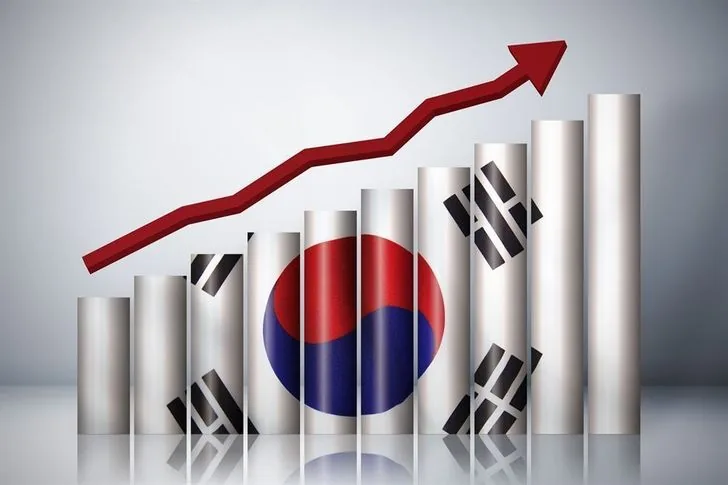
South Korea’s economic performance in the third quarter of 2026 is under close watch as the country navigates a complex global environment marked by shifting trade dynamics and domestic policy adjustments. The Bank of Korea is set to release its advance estimate of real GDP growth for Q3 2026 on October 27, 2026, providing the first official snapshot of the economy’s year-on-year expansion during this period. This figure is crucial for policymakers, investors, and analysts alike, as it reflects the health of the export-driven economy amid ongoing geopolitical tensions and global inflationary pressures.
Read more What price will Dogecoin hit in August?
The GDP growth rate will be reported as a year-on-year percentage change, with the Bank of Korea’s advance estimate serving as the official resolution source. The data will be drawn from the “Growth Rates by Type of Economic Activity and Component of Expenditure” table, focusing on the “Gross Domestic Product” row for Q3 2026. Importantly, only the initial release will be considered for analysis, excluding any subsequent revisions. This approach ensures clarity and consistency in assessing South Korea’s economic trajectory at this point in time.
Candidate Analysis
Recent developments over the past two weeks provide a clearer picture of South Korea’s economic momentum heading into Q3 2026. First, export data released in mid-October showed a modest rebound, with outbound shipments rising 2.3% compared to the previous quarter, signaling some resilience in global demand despite ongoing supply chain challenges. Second, industrial production figures for September indicated a 1.1% increase month-on-month, driven largely by semiconductor and automotive sectors, which are key pillars of the South Korean economy. Third, consumer confidence surveys conducted in early October revealed a slight uptick, suggesting that domestic consumption may have stabilized after a period of cautious spending. Lastly, inflation data from September showed a deceleration to 2.4% year-on-year, easing pressure on household budgets and potentially supporting stronger economic activity.
These facts collectively support the scenario that South Korea’s GDP growth in Q3 2026 will likely fall within the 3.0% to 3.4% range. The export recovery and industrial output gains are consistent with moderate but steady growth, while easing inflation and improved consumer sentiment provide a favorable backdrop for domestic demand. In contrast, the 2.5% to 2.9% and 3.5% to 3.9% ranges appear less supported by recent data. The lower band underestimates the export and production improvements, while the higher band seems optimistic given lingering global uncertainties and cautious corporate investment trends. However, uncertainties remain around the impact of potential geopolitical developments and the pace of global economic recovery, which could sway growth either way.
Market Signals
Market indicators show the highest probability assigned to the 3.0% to 3.4% growth range at nearly 40%, with significant trading volume and relatively stable pricing over the past week. The 3.5% to 3.9% range follows with about 21% probability, reflecting some optimism but less conviction. Lower growth bands, including below 2.0% and 2.0% to 2.4%, have notably smaller probabilities and volumes, indicating less market confidence in a slowdown. Price movements have been modest, suggesting that participants are awaiting the official data release before making decisive moves.
Read more Bitcoin Up or Down on August 23?
Our Verdict
Given the recent export rebound, industrial production gains, and easing inflation, the most plausible outcome is that South Korea’s GDP growth in Q3 2026 will land between 3.0% and 3.4%. These factors point to a moderate expansion consistent with the country’s structural strengths and current global conditions. The confidence level is medium because while the data trends are supportive, external risks such as geopolitical tensions in East Asia and fluctuations in global demand remain significant wildcards.
Key triggers that could alter this outlook include unexpected shifts in trade policies or sanctions affecting South Korea’s major export markets, sudden changes in semiconductor demand given its outsized role in the economy, and domestic policy moves such as adjustments in fiscal stimulus or interest rates by the Bank of Korea. Monitoring these developments closely will be essential as the October 27 release approaches.
In summary, the evidence tilts toward a steady but not spectacular growth rate in the 3.0% to 3.4% range, reflecting a balance between resilience and caution in South Korea’s economic landscape.
Read more Ethereum above ___ on August 23?
Sources: