


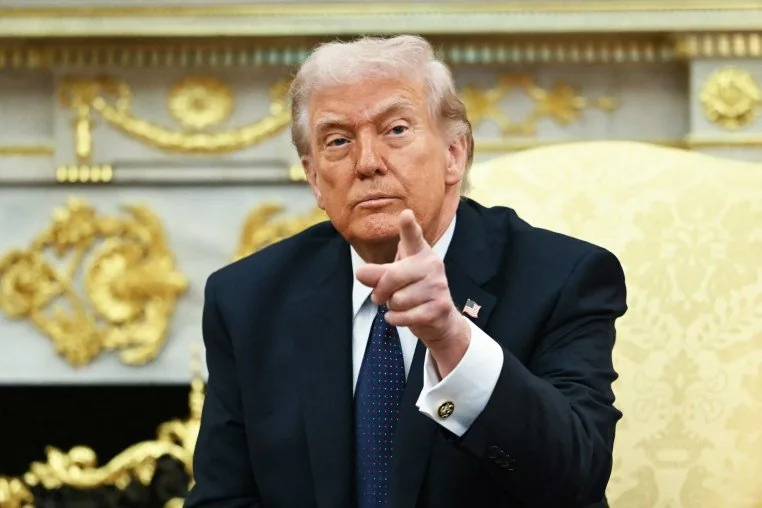
As the mid-March window approaches, the focus on Donald Trump’s rhetorical choices intensifies, specifically regarding his commentary on Middle Eastern leadership. The period between March 9 and March 15, 2026, presents several opportunities for public addresses, yet the likelihood of him using specific formal titles for Iranian leadership remains a subject of significant debate. Historically, his verbal patterns favor broad strokes over specific nomenclature.
Read more Ethereum above ___ on March 18?
Recent Rhetorical Trends and Fact-Check
- Preference for “Iran” over specific titles: In his most recent public appearances and rallies over the last 14 days, Trump has consistently referred to the “Iranian regime” or simply “Iran.” For instance, during his recent commentary on regional stability, he emphasized his previous “Maximum Pressure” campaign without once naming the Supreme Leader. This aligns with his long-term habit of personifying nations rather than citing individual religious titles.
- The “Truth Social” vs. Verbal Gap: While Trump has used the term “Ayatollah” in written statements and social media posts in the past to project a tough stance, the current criteria strictly limit resolution to recorded audio or video. Data from his speeches over the last year shows a marked decrease in the use of the word “Ayatollah” in live settings compared to his written output.
- Focus on Domestic Policy: Recent campaign stops have seen a pivot toward domestic economic figures and border security. When foreign policy does arise, the narrative is typically centered on the “strength vs. weakness” trope regarding the current administration, rather than deep dives into the specific hierarchy of foreign adversaries.
The Case for “Ayatollah” or “Khamenei”
Here’s the thing: for Trump to mention “Ayatollah” or “Khamenei” this week, there would likely need to be a specific, high-profile provocation from Tehran that forces a direct response. Look closer at his speech patterns—he tends to use these specific names only when reading from a prepared script or during formal interviews where a moderator introduces the name first. Given that his current schedule favors town halls and rallies, the environment is more conducive to “off-the-cuff” remarks where he almost exclusively uses the word “Iran.”
Why does this matter? Because the resolution criteria are narrow. A mention of “The Supreme Leader” without the specific words “Ayatollah” or “Khamenei” would result in a negative outcome. Unless a major geopolitical event occurs between March 9 and March 15 that necessitates a formal address, the probability of these specific terms surfacing in his verbal vocabulary is statistically low.
Read more Avg. # of ships transiting Strait of Hormuz end of March?
Comparison with General Rhetoric
Compared to broader terms like “China,” “Border,” or “Inflation,” which are staples of every single appearance, “Ayatollah” is a niche term in the Trump lexicon. While he is certainly focused on Iran’s influence, he rarely gets bogged down in the specifics of their political titles during a rally. The hurdle for a “Yes” resolution is high because it requires a linguistic precision that often disappears when he is speaking to a live audience.
Current Market Context
Current data reflects this skepticism, with the specific mention of “Ayatollah” or “Khamenei” holding a minimal probability of 0.5%. Despite a total volume of approximately $783,015 and liquidity sitting around $276,670, the price has remained stagnant at the lowest possible threshold (0.005), indicating that there is virtually no expectation of these terms being used in the upcoming week.
Read more Bitcoin price on March 18?
Sources: