


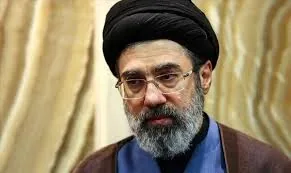
Mojtaba Khamenei has spent decades as the “gray cardinal” of Tehran, wielding immense power from the shadows of his father’s office. For years, his public profile has been almost non-existent, limited to grainy archival footage or distant shots. However, the conversation around his visibility has shifted from “if” to “when,” especially as the internal mechanics of the Islamic Republic prepare for an eventual transition of power.
Read more #1 Free App in the US Apple App Store on March 13?
The Succession Pressure Cooker
The most critical factor driving the possibility of a public appearance is the intensifying focus on the succession of the Supreme Leader. Reports from late 2024 and early 2025 indicate that the Assembly of Experts—the body responsible for choosing the next leader—has moved beyond theoretical discussions. There is a growing consensus among regional analysts that for Mojtaba to be a viable successor, he must shed his image as a backroom operator and establish a direct public connection with the Iranian people and the security apparatus. Here’s the thing: a sudden appearance wouldn’t just be a photo op; it would be a formal signal of his candidacy.
The Nowruz Factor
Another major trigger is the Iranian New Year, Nowruz, which falls on March 20. This is traditionally the most significant period for leadership addresses and public appearances in Iran. If the establishment intends to introduce Mojtaba to the public stage, the Nowruz holiday window provides the perfect cultural and political backdrop. Historically, the Supreme Leader uses this time to set the tone for the year, and a joint appearance or a televised message involving Mojtaba would carry immense weight.
Why March 31 is the most plausible window
The timeframe ending March 31 stands out as the most logical candidate for a confirmed appearance. This window fully encompasses the Nowruz celebrations (starting March 20) and the subsequent two-week holiday period when the government often releases high-profile media content. Unlike earlier dates, this period aligns with the institutional rhythm of the Iranian state. If a transition plan is in motion, the end of the Persian calendar year is the most likely moment for a strategic “reveal.”
Read more Bitcoin Up or Down — March 12, 8AM ET
Comparing the earlier timelines
Looking at the mid-March dates, such as March 13 or March 16, the case for an appearance is significantly weaker. These dates fall just before the major holiday cycle begins. There are no specific religious or state anniversaries in that immediate window that would justify breaking a decades-long streak of privacy. An appearance before March 16 would likely require an external shock—such as a sudden health crisis in the leadership—rather than a planned political rollout. Without such a catalyst, these early dates remain low-probability events.
Current Sentiment and Data
Analytical trends show a clear preference for the end-of-month timeline. While the probability for an appearance by March 13 remains very low at approximately 3.7%, and March 16 sits at 8.5%, the expectations for the March 31 window are notably higher, hovering around 36.5%. This reflects a broader understanding that if a public debut is coming, it will be tied to the significant state events occurring in the latter half of the month. Total volume for these discussions has surpassed 400,000 units, showing significant engagement with the March 31st deadline.
Read more Ethereum price on March 12?
Sources :