





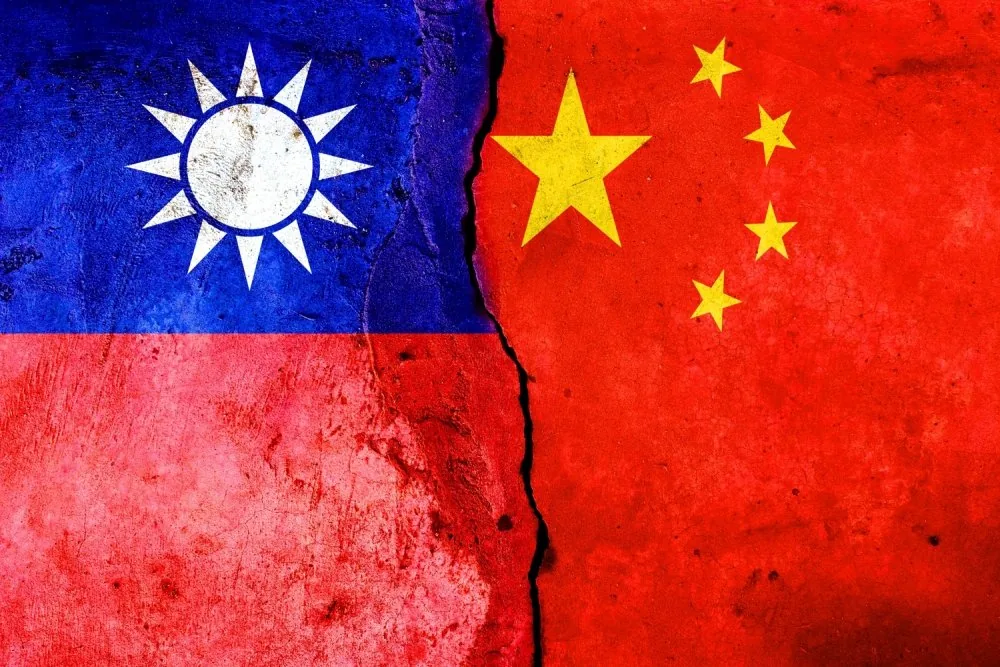
Background
The question of whether China will launch a military offensive against Taiwan by September 30, 2026, remains a critical geopolitical issue. Taiwan, officially the Republic of China, operates as a self-governing entity, but Beijing claims it as a breakaway province. The risk of conflict has been a persistent concern for years, especially given China’s increasing military modernization and assertive regional posture.
Read more 2nd Largest Company end of September?
This specific timeline is important because it sets a clear deadline for any potential offensive, defined as a military action aimed at establishing control over any inhabited territory administered by Taiwan. The resolution of this question depends on official confirmation from China, Taiwan, the United Nations, or any permanent member of the UN Security Council, or a consensus of credible reporting. This framework ensures that any military action recognized as an invasion must be verifiable and significant.
Key players include the Chinese Communist Party leadership, Taiwan’s government, and international actors such as the United States and the UN Security Council members, all of whom influence the strategic environment and diplomatic pressures surrounding Taiwan.
Key Factors
Over the past two weeks, several developments have shaped the outlook. First, China’s official military exercises near Taiwan have continued but remained within the scope of routine drills rather than escalatory maneuvers. The Chinese Ministry of National Defense confirmed ongoing training but denied any plans for imminent offensive operations. This was reported on March 10 and March 20 by the Global Times.
Second, Taiwan’s government has reinforced its defensive posture, announcing increased procurement of advanced missile systems and strengthening asymmetric warfare capabilities. The Ministry of National Defense released a statement on March 15 emphasizing deterrence rather than provoking conflict, as covered by Taipei Times.
Third, diplomatic signals from Washington and other Western capitals have underscored support for Taiwan’s security without explicitly committing to direct military intervention. The U.S. State Department reiterated its One-China policy while warning Beijing against unilateral changes to the status quo, as noted in a briefing on March 18 by U.S. Department of State.
Read more Bitcoin above ___ on August 6?
What remains uncertain is China’s internal decision-making calculus, especially regarding timing and international reaction. While military modernization continues, no official document or credible leak has indicated a firm plan to invade within the next three years. The balance between deterrence, economic considerations, and global diplomatic pressures keeps the situation fluid.
Market Signals
Current market indicators assign a low probability to an invasion by the deadline, with minimal recent price movement and a tight bid-ask spread suggesting consensus on a low likelihood. Trading volumes remain steady but do not reflect any sudden shifts in perceived risk. These signals align with the broader geopolitical analysis but serve only as a secondary reference point.
Our Verdict
Given the available evidence, an invasion of Taiwan by China before September 30, 2026, appears unlikely. The absence of escalatory military actions beyond routine exercises, Taiwan’s bolstered defenses, and cautious diplomatic messaging from major powers all point toward a continuation of the current status quo rather than outright conflict.
Confidence in this assessment is high because recent official statements and observable military activities do not support an imminent offensive. The strategic costs for China remain substantial, and the international environment is not conducive to a sudden invasion.
That said, several triggers could alter this outlook. First, a significant shift in China’s domestic politics or leadership rhetoric advocating for immediate action. Second, a major incident or miscalculation in the Taiwan Strait that escalates tensions rapidly. Third, changes in U.S. or allied policies that either embolden or deter Beijing’s military ambitions. Monitoring these developments will be crucial for reassessing the risk.
Read more Clacton by-election Winner
Источники: